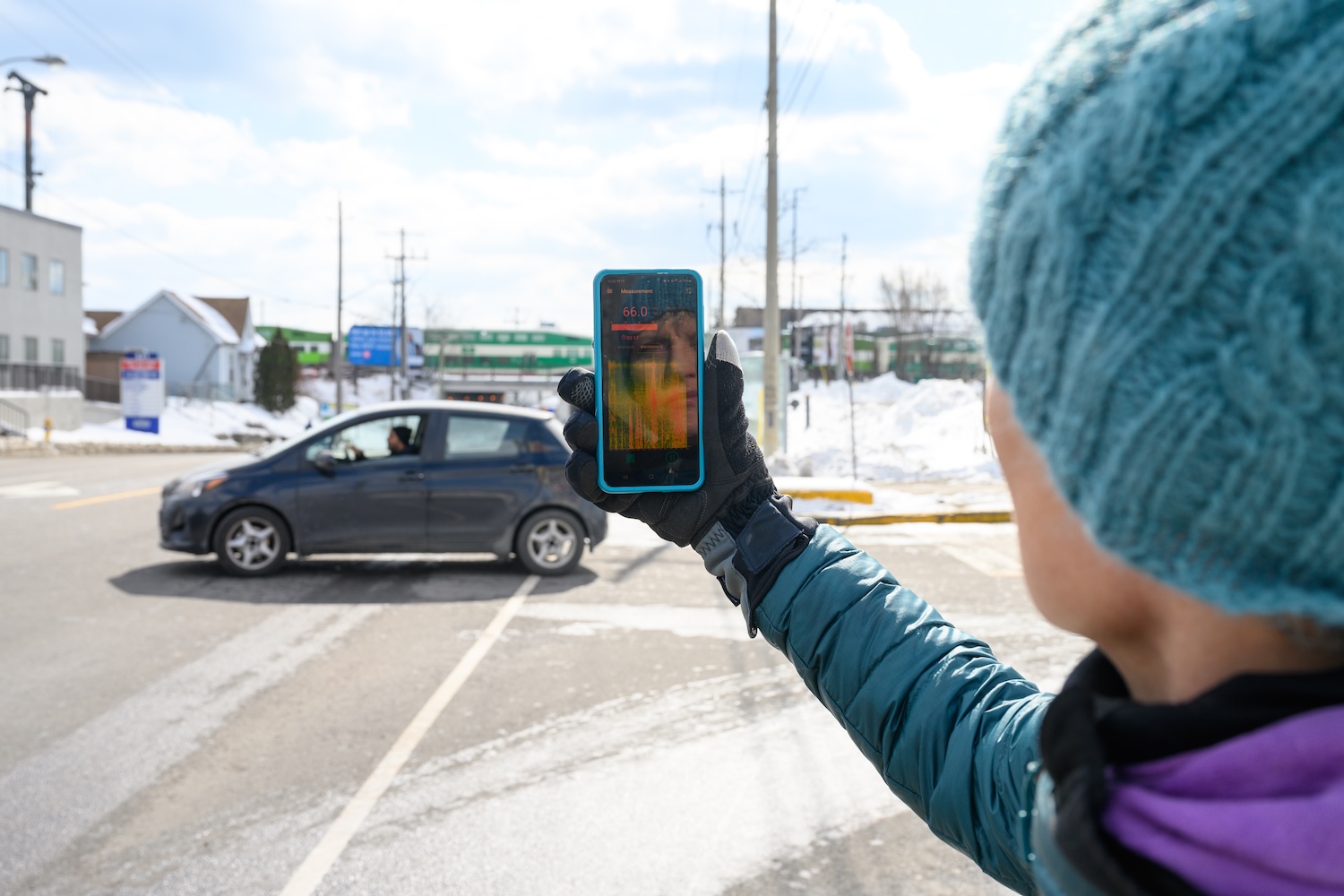
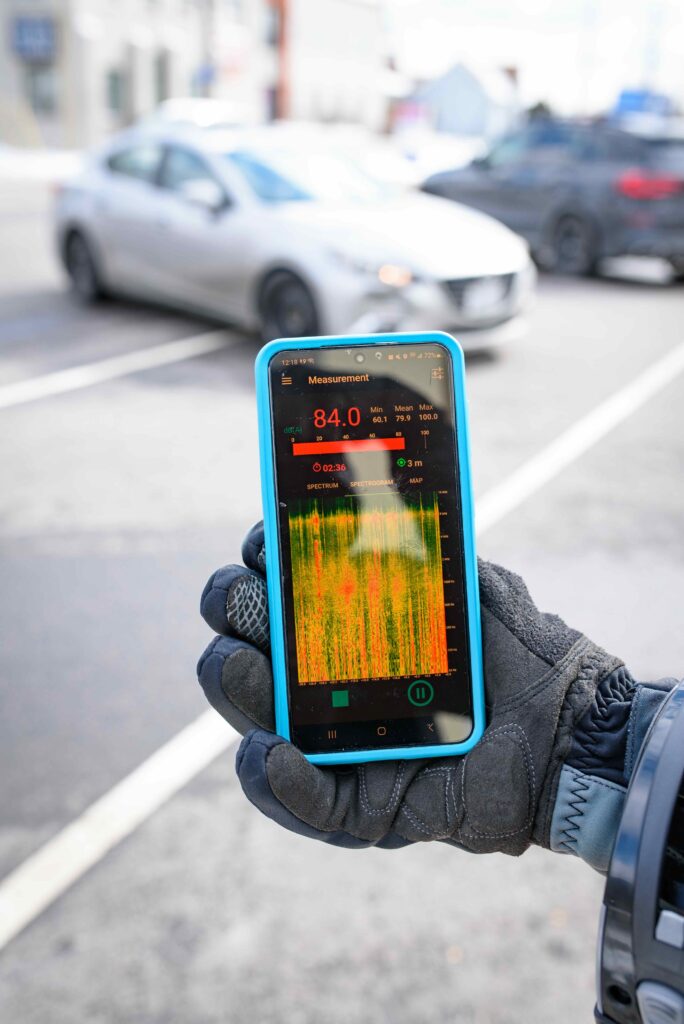
We have a very good measuring device in our hands – most of the time!
While cell phones are designed to capture our voices while minimizing background noises, they are still very useful to learn about sound, sound levels and what sound levels we are being subjected to.
Check out the slides below and learn about the 3 options for phone apps. There is an app for everyone.
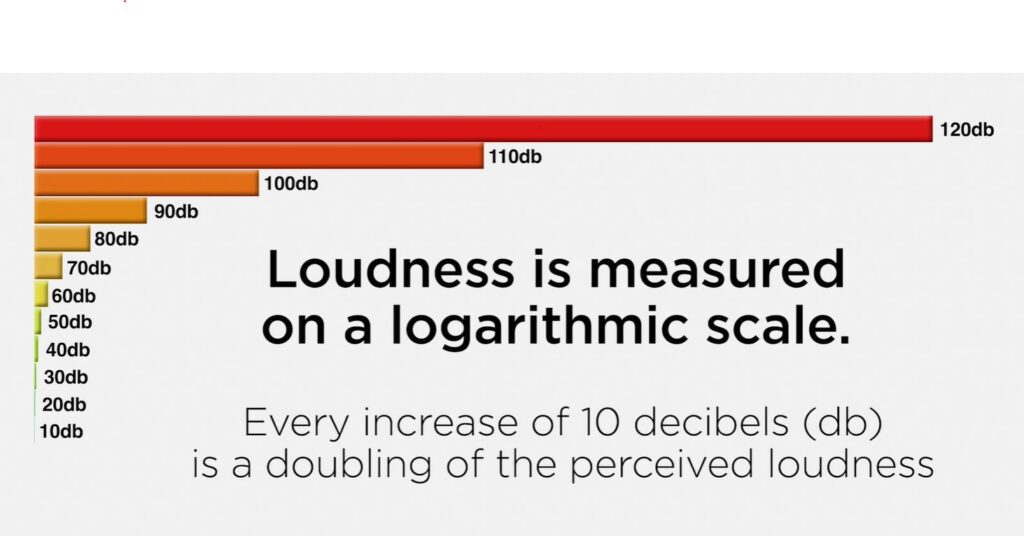
At the end is a discussion about the logarithmic scale of sound.
My favorite: All phones
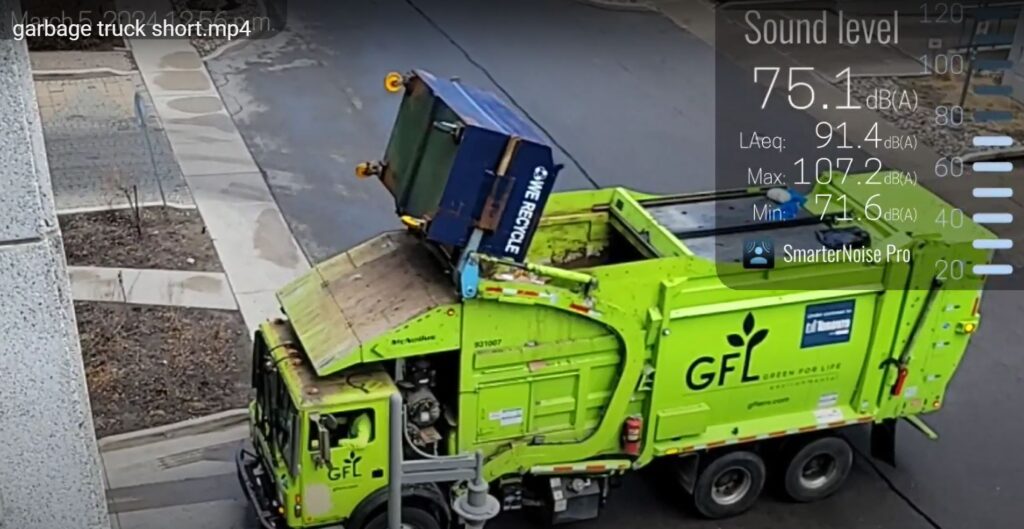
SmarterNoise is the free version that records audio, video and decibel levels and more in one file. I moved to the pro version as the free one had loud ads. Go figure.
Frequency spectrum display with several display modes
A-, C- or no frequency weighting for sound level measurement
Slow, fast or peak update mode
Limited length recording
Export of measurement data in CSV format
Updated user interface
No ads
Noise Capture (Android)
Noise Capture was developed by two universities in France. If you submit your data it becomes part of research. More here.
It is a free and open-source Android application that allows users to measure and share the noise environment. Each noise measure is combined with its GPS track so that the result can be displayed in interactive maps within the application. More information is on their website.
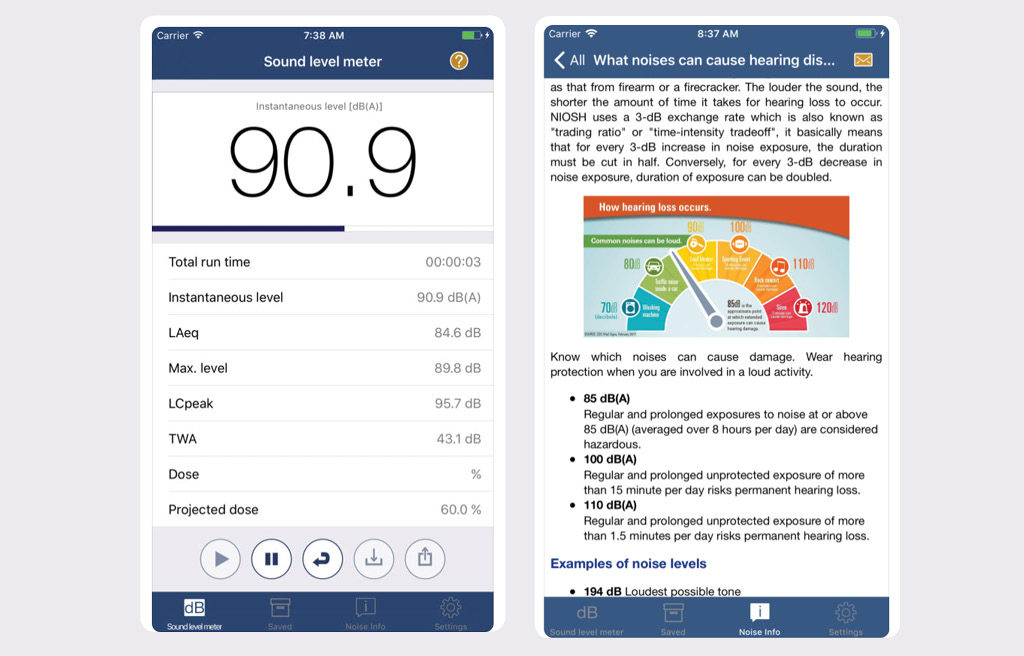
Developed in the US by the National Institute of Safety & Health. The NIOSH Sound Level Meter (SLM) app measures workplace noise to determine if workers are exposed to hazardous noise. The free app combines the best features of professional sound levels meters and noise dosimeters into one simple tool.
If you feel like watching a video….
Logarithmic Scale
For International Noise Awareness Day (April 24) the documentary “The Quietest Year” was launched. This is an entertaining and informative film. It also had great graphics.
This clearly shows how peak noise events (especially at night) that go from 50 or 60 db to 90 are disruptive, disturbing and harmful to our health.
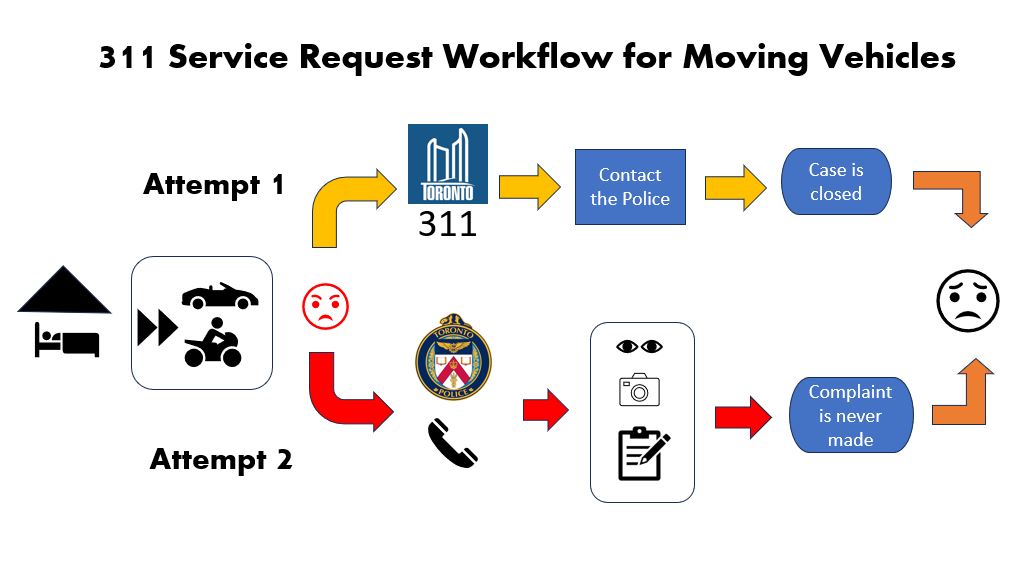
The above image is what the current process for reporting moving vehicles and the end result. The City of Toronto acknowledges this and along with Toronto Police Services are interested in fixing it.
This is one example of the gaps that exist when the city needs to make decisions regarding noise pollution. The great news is that the City of Toronto is going to transform 311 to Toronto at Your Service to address these issues. We are in the very beginning stages of this process and are excited about the opportunities to influence this process.
Scroll down to read more about data from a variety of sources.
311 Noise Complaints
This data represents the reports submitted to 311 for complaints that can be enforced by bylaw officers.
This means that the motor vehicle complaints numbers represent STATIONARY sources. For example, your neighbour who has a modified car and starts it up at 5 am to “warm up”.
Only the Toronto Police, Ontario Provincial Police and RCMP can stop vehicles and issue tickets, including tickets for noise infractions.
It’s also pointless to call 311 about the noise of garbage pick-up from a private company at 4 am. For loading and unloading noise from such vehicles as garbage and delivery trucks, a time-restraint exemption was granted during the pandemic , and is still in place today, which means that some loading and unloading noise is allowed 24/7.
Power device noise includes leaf blowers, but you can’t make a report between 8 a.m. to 7 p.m. on weekdays or between 9 a.m. to 7 p.m. on Saturdays, Sundays and statutory holidays.
By not managing moving vehicle noise complaints well and by not allowing all noise reports at all times the City doesn’t have a complete picture of the problem.
311 Complaints & Citations issued by Bylaw Officers
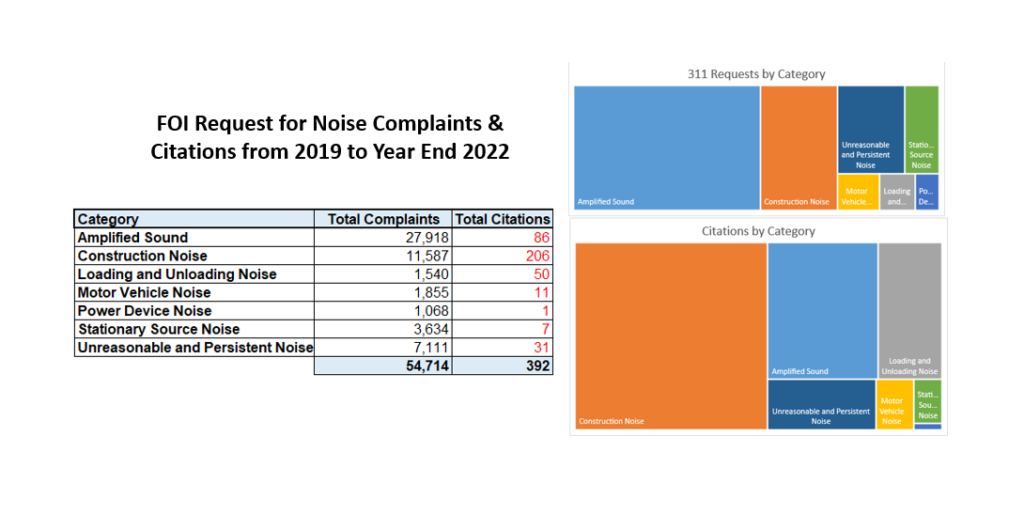
Through a Freedom of Information Access request, we have the number of complaints to 311 and subsequent citations or tickets issued up to the end of 2022.
For all complaints, only three categories had 1% or more enforcement levels:
Loading and Unloading noise 3%
Construction Noise 2%
Motor Vehicle Noise 1%
That means many complaints had no follow up or enforcement.
As we now know, the City cannot enforce moving vehicle violations and this is not clear to many of us. So we have called 311, only to be told to call the police and our case is closed.
The Toronto Police have a way to make a driving complaint (they do not have an app for that) but they want a description of the incident and license plate and a picture. If you hear a loud muffler from the side of the road, that information would be hard to get, impossible at night from inside your home.
Many reports are never made and apathy and distrust of the system has grown.
Toronto Police Charges under the Highway Traffic Act
The Toronto police are able to charge drivers with an improper muffler or for making unnecessary noise under the Highway Traffic. You can see from the chart they they don’t do that very often, with (on average) less than 1,000 charges per year.
The previous bylaw didn’t allow for testing of vehicles only motorcycles and and only at idle, and the threshold was 92 dba at 50 cm away.
Thanks to public activism and a supportive Council, this law has been changed which comes into effect on June 1, 2024:
“No person shall emit or cause or permit the emission of any sound from a stationary motor vehicle exceeding the following when measured at least 50 cm from the exhaust outlet using a sound level meter: (a) 92 dB(A) at idle; or (b) 96 dB(A) at any engine speed greater than idle.”
Hopefully this will result in more tickets and a reduced number of modified vehicles on our roads.
“Not 311” Noise Report
To help the city understand how bad the problem is and where, we have created a “Not 311″ Noise Report. You can report many noise sources, at any time of day or night. This report is quick to complete, anonymous, and covers a wide range of noise sources.
Click the link to learn to learn more about our “Not 311” Noise Report. and to see more dashboards of the data.
Weekly Measurements
People who are curious and concerned about noise at their home invite us to take measurements with our sound levels for weeks at a time. This allows us to see trends, quantify exposure and gather ambient and peak noise events.
We’ve learned that while highways are loud, arterial roads are worse for peak noise events. People who live close to highways experience ~ 43 noise spikes > 10 dBA over their average ( 70 to 80 dBA) in 24 hours. On arterials, the number of noise spikes increases to 142 > 10 dBA over their average (mid 60s) in 24 hours.
Close to 2 million people live on Toronto’s arterial roads and highways. This is a huge number of people exposed to hurtful peak noise events by a few drivers.
Click the video to learn how we came to this number.
Health data from TPH
It is well understood that negative health effects start at 55 decibels.
These can include cardiovascular disease, cognitive impairment, sleep disturbance and mental health impacts.
As we have no defense against sound, long term exposure can lead to heart attacks.
For those living or working next to arterials or highways, the noise levels are always above 55 db.
You can also donate towards “ A Less Noisy Toronto ” through our partners at Small Change Fund. A heartfelt thank you to those that have already donated!
Our very first attempt to collect data about noise in Toronto was the “Not 311” Noise Report. We are happy to say that the report did its job, thanks to our engaged community.
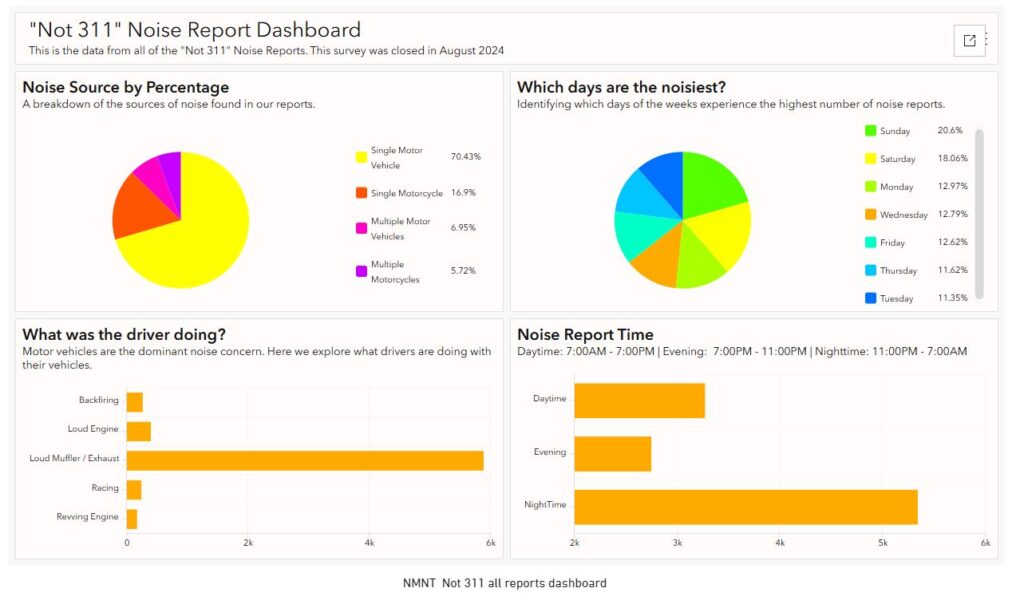
These surveys allowed residents to easily report noise from multiple sources and view their submissions alongside others. With over 12,000 reports collected, we built an independent public dataset that, for the first time, provided a clear picture of noise levels, as well as detailed data on vehicle noise. This data empowered us to confidently engage with the City of Toronto during its Noise Bylaw Review—sending emails, speaking to committees, and advocating for change.
The result? The City now collects all noise reports at all times, vastly improving its dataset. A huge thank you to everyone who logged a point, sent an email, or spoke up—your efforts made this possible.
These surveys are now closed and we are looking forward to building a new set that will serve everyone even better.
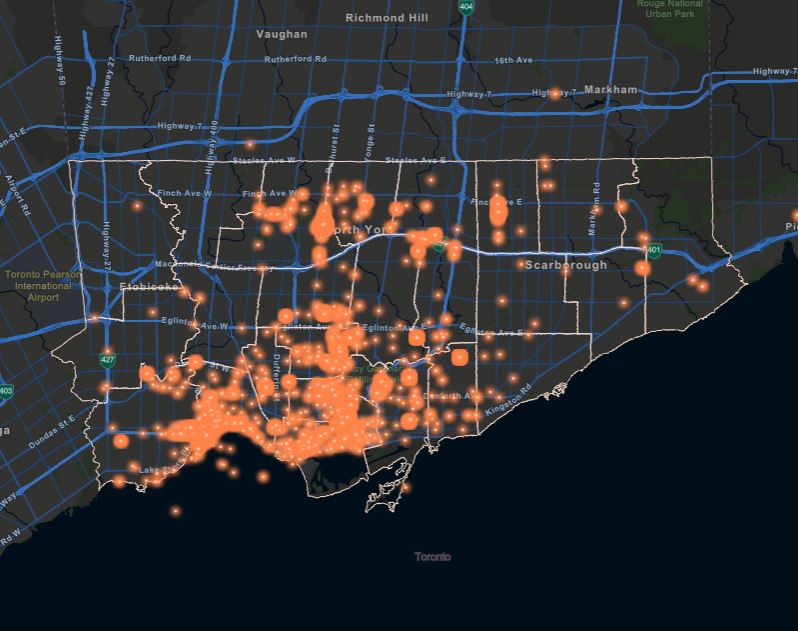
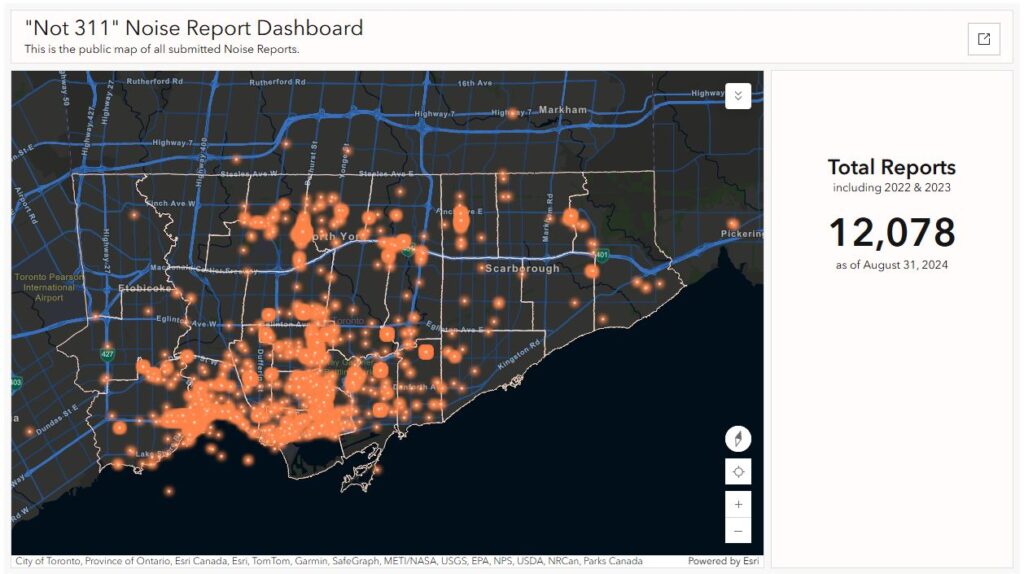
“Not 311” Noise Report Map
Below are 2 images of the final dashboards of all noise reports over the life of the survey.
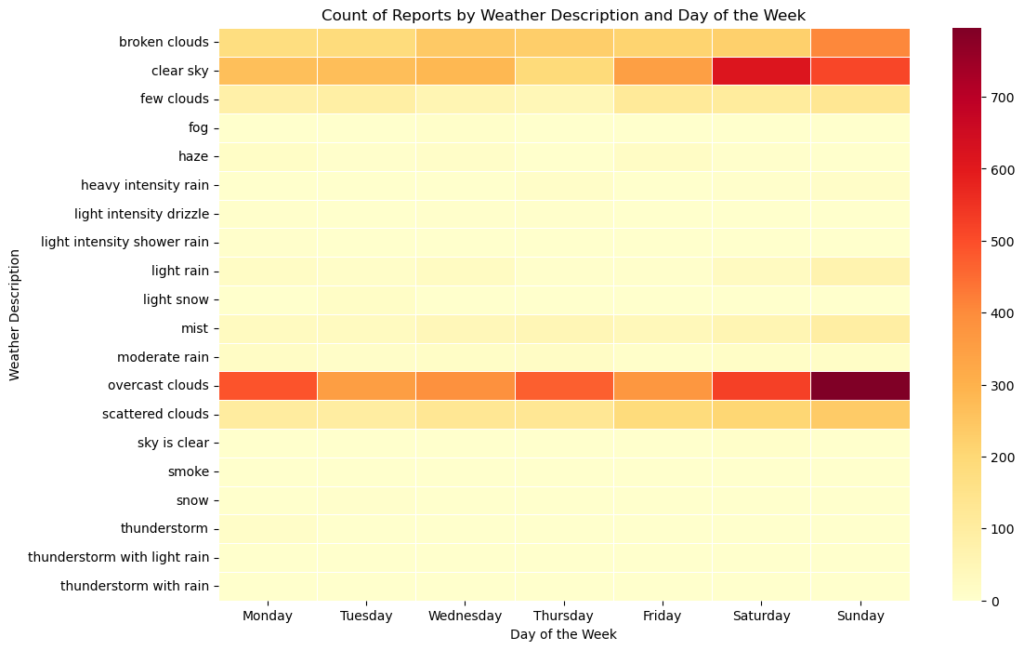
This data was processed and analyzed by using Python and Jupyter notebooks. Then it was enriched by adding in days of the week and weather. This told us on what days and hours noise was most likely to be reported, and in what kind of weather. They confirm most of what we already knew. We are equally likely to be disturbed and make a noise report on clear or overcast days. The time we are most likely to report is from 1 to 2 am. If dry roads occur on weekends, when it is also the loudest, we are more likely to become stressed and make a report.
Another noise survey is on the drawing board, which we expect to be additionally useful as an empowerment and engagement tool, effectively communicating to City Staff and Councillors the extent to which noise pollution is a problem in Toronto.